

Serving executives in Charleston, Mount Pleasant, and across the country.
Your Compensation is Complicated. Your Financial Plan Should Connect It.
RSUs. Stock options. Deferred compensation. Employer stock. Benefits. Taxes. Retirement.
Each decision can affect the others.
Noble Oak Capital Partners helps corporate executives connect compensation, investments, taxes and retirement planning so today’s decisions support the life you are building toward.


Company
Stock

RSUs
& Options

Deferred
Compensation

Executive
Benefits

Taxes

Retirement
Planning

Retiring in the Next Five Years?
The years immediately before retirement can contain some of the most consequential financial decisions of an executive’s career.
Your salary may stop. Equity awards may continue vesting. Deferred compensation distributions may begin. Employer benefits can change. Tax brackets can shift. A concentrated stock position may suddenly become a much larger percentage of your financial life.
Those decisions should not be evaluated one at a time.
Noble Oak helps you evaluate your compensation, equity, benefits, taxes, investments and retirement income as one connected picture so you can make more confident decisions before and after leaving your company.
Complex Compensation. A Connected Plan.
For many corporate executives, wealth accumulates through far more than a paycheck.
Salary, bonuses, RSUs, stock options, deferred compensation, employer retirement plans, company stock and executive benefits can all affect when you can retire, how much you keep after taxes, how concentrated your wealth becomes, how your portfolio should evolve, what income replaces your paycheck, what happens to employer benefits, and what your family ultimately inherits.
A decision that looks attractive in isolation may create unintended consequences somewhere else.
Noble Oak helps you see these decisions as one financial picture.

Company Stock: Risk, Opportunity, and Optionality
A significant employer-stock position is not automatically something to eliminate.
It can represent meaningful upside, tax considerations, estate-planning opportunities, charitable opportunities, liquidity potential and concentrated risk.
The better question is: How should this asset be used within the rest of my financial plan?
Holding, selling, gifting, hedging, monetizing, and strategically leveraging the position while considering liquidity, taxes, downside risk and the rest of the portfolio.
Specific strategies depend on an individual’s circumstances and may involve investment, tax, legal or lending considerations that require coordination with the appropriate professionals.

RSUs, Stock Options and Equity Compensation
Equity compensation can create substantial wealth. It can also create a series of interconnected decisions involving vesting, taxes, concentration, liquidity, retirement timing, and estate or charitable planning.
The goal is not merely to manage each grant. It is to understand how years of equity compensation fit into the rest of your financial strategy.
Deferred Compensation Requires a Multiyear View
Deferred compensation can be powerful precisely because timing matters. Distribution elections made today can affect income years from now.
Those future distributions may overlap with salary, bonuses, equity vesting, retirement-account distributions, Social Security, Roth conversions, capital gains, charitable giving, Medicare-related income thresholds, and other retirement income.
Noble Oak helps evaluate how future income streams interact across multiple years so retirement and tax decisions can be considered together.

When Does Work Become Optional?
Retirement planning for an executive should answer more than “Do I have enough money?”
[H3] The goal is financial independence: knowing when work becomes a choice rather than a financial requirement.
- What does our desired lifestyle actually cost?
- What happens when salary and bonus stop?
- How much future income comes from deferred compensation?
- What employer stock or equity awards remain?
- When should Social Security begin?
- How should healthcare be funded before Medicare?
- Which accounts should support spending first?
- How do taxes change after employment?
- What role should Roth conversions play?
- How much market risk can the plan tolerate?
- What happens if markets fall immediately after retirement?
- What should accumulated wealth ultimately make possible?
Concentric Wealth™ for Business Owners
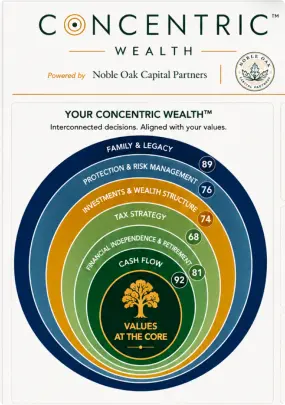
Concentric Wealth™ is Noble Oak Capital Partners’ planning system for evaluating the interconnected areas of your financial life. For corporate executives, that means compensation decisions are not evaluated separately from retirement, taxes, investments, protection or family priorities.
Values at the Core:
What do you actually want financial independence to make possible?
Cash Flow:
Salary, bonus, deferred compensation and the transition from earned income.
Financial Independence:
When work becomes optional and how your financial resources can support life afterward.
Tax:
Equity compensation, deferred income, retirement distributions, Roth opportunities, capital gains and charitable planning.
Investments:
Employer-stock concentration, portfolio structure, risk and the role investments should play after employment ends.
Protection:
Employer benefits, insurance, healthcare and the risks surrounding the transition.
Family & Legacy:
How accumulated wealth should support your family, charitable priorities and long-term legacy.
Your Top 3 Acorns™
A comprehensive plan can uncover dozens of things worth considering. Trying to address all of them at once usually creates more complexity, not more progress.
Noble Oak identifies your Top 3 Acorns™, the three priorities we believe deserve attention next.
Clarity is Knowing What Matters. Completion is Making Sure it Happens.
- What needs to happen
- Why it matters
- Who owns it
- When it should happen
- How progress will be tracked

An Illustrative Executive Example
Consider a fictional executive who plans to retire in three years. At first, the primary question appears straightforward: “Can we afford for me to retire?”
The broader analysis reveals several connected decisions: a substantial employer-stock position creates both opportunity and concentrated risk; deferred compensation begins shortly after retirement; large traditional retirement accounts may create future tax pressure; employer healthcare ends before Medicare eligibility; and estate documents and beneficiary designations have not been reviewed recently.
Potential Top 3 Acorns™ might include:
- Model a multiyear income and tax strategy spanning employment, retirement and deferred-compensation distributions.
- Coordinate estate and beneficiary updates with legal counsel before the retirement transition.
- Evaluate strategies to strategically leverage the concentrated employer-stock position while managing liquidity, tax exposure and downside risk.
Illustrative example only. It does not represent any specific client, recommendation or expected outcome
Three Ideas Guide the Process
1
Values Become the Plan:
The plan begins with what you want your career and accumulated wealth to make possible.
2
Every Decision Connected:
Compensation, company stock, taxes, investments, benefits and retirement are evaluated as interconnected decisions.
3
Clarity Through Completion:
The planning process identifies priorities, assigns responsibility and follows through on implementation.
Frequently Asked Questions
How much company stock is too much?
There is no universal percentage. The appropriate level depends on your broader net worth, income dependence on the employer, tax circumstances, liquidity needs, risk tolerance, estate objectives and the strategic role of the position within your financial plan.
Should I sell RSUs when they vest?
The answer depends on your concentration, taxes, liquidity needs, long-term investment strategy and other financial priorities. Vesting should be considered as part of the broader plan rather than through a single rule.
When should I exercise stock options?
Exercise decisions may involve option type, expiration dates, taxes, company outlook, diversification, cash requirements and retirement timing. The appropriate strategy depends heavily on the specific award and individual circumstances.
How should deferred compensation fit into retirement?
Deferred-compensation distributions should be evaluated alongside other expected income, tax brackets, investment withdrawals, Social Security, Roth conversions and retirement spending.
What should I do in the five years before retiring?
This period may be especially important for coordinating compensation, equity awards, taxes, benefits, healthcare, portfolio structure, estate planning and future retirement income.
Can I retire before Medicare?
Potentially. The analysis should consider healthcare costs, insurance options, taxable income, portfolio withdrawals and the rest of the financial plan rather than treating age 65 as an automatic retirement date.
What happens to my taxes after retirement?
Taxes may change significantly when salary stops, but other income sources can replace it. Deferred compensation, retirement distributions, investment income, capital gains, Social Security and Roth conversions can all affect the result.
Can Noble Oak work with my CPA and attorney?
Yes. Complex executive planning frequently requires coordination among financial, tax, estate, insurance and other professionals. Noble Oak helps connect the financial strategy while recognizing when specialized tax or legal advice should come from the appropriate professional.
Who We Work With
- Executives who receive RSUs, stock options or other equity compensation
- Executives with significant wealth concentrated in employer stock
- Executives who participate in nonqualified deferred-compensation plans
- Executives who receive substantial bonuses or variable compensation
- Executives evaluating retirement within the next five years
- Executives who need investments and tax decisions coordinated
- Executives with $1 million or more of investable assets
- Executives with multiple advisors but no one connecting the entire financial picture
- Executives who want clear priorities and ongoing accountability
Why Noble Oak Capital Partners?
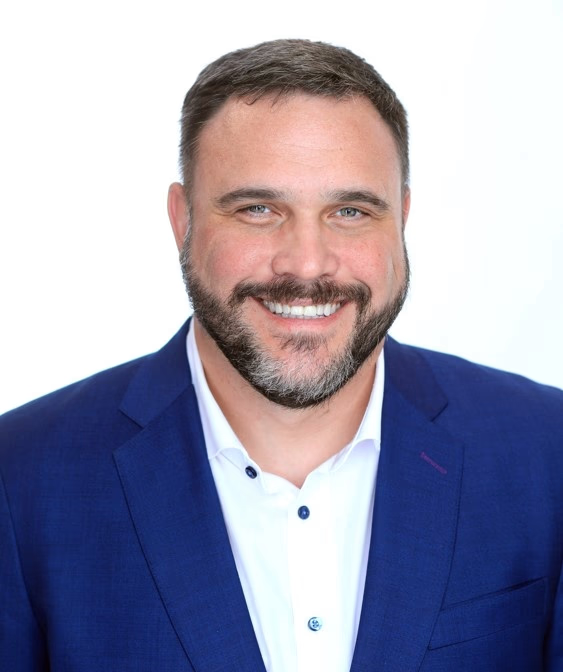
Jason Noble brings more than 20 years of financial-services experience and holds the CFP®, RICP® and CEPA® credentials.
Noble Oak was built around a different idea: Your values should determine the plan. Your financial decisions should be connected. And the work should move toward completion.
Through Concentric Wealth™, we help executives understand where they stand, what matters most and what should happen next.
A More Intentional Tomorrow
Your career has created meaningful opportunities. Now the question becomes what those opportunities should make possible next.
Noble Oak Capital Partners helps turn a complex financial life into a clearer plan for retirement, financial independence, family and the years ahead.
No predetermined retirement date. No one-size-fits-all stock strategy. Just a conversation about where you are, what you are building toward and what may deserve attention next.